
Hail Damage

August Blog Post 3
Customer Interactions, Hail Damage, Hail Event, Hail Season

PDR Customer Reviews That Win More Hail Season Jobs

PDR Customer Reviews That Win More Hail Season Jobs PDR customer reviews decide whether a driver with hail damage calls your shop or scrolls past it. Around 90% of consumers read reviews before picking a repair shop. Most won’t consider a business rated below four stars. That single fact changes how seriously a shop should treat its review strategy, especially heading into a busy back half of hail season. Trust is already a hard sell in this industry. A recent AAA survey found that roughly two-thirds of U.S. drivers don’t fully trust auto repair shops, largely over fears of unnecessary work or inflated pricing. PDR customer reviews are one of the few tools that directly counter that skepticism. They come from someone the prospective customer actually believes: another driver who just went through the same thing. Why PDR Customer Reviews Matter More Than General Repair Reviews Paintless dent repair is often unfamiliar to customers until their car gets hit by a storm. They don’t know what “PDR” means. Whether it’s legitimate is anyone’s guess. And they definitely don’t know if your shop is any good at it. Reviews fill that knowledge gap fast. Google hosts the vast majority of automotive reviews. Each new review tends to drive additional website visits, direction requests, and phone calls. In other words, every review you collect quietly does marketing work long after the job is finished. Furthermore, a one-star increase in your average rating can lift revenue by five to ten percent. That’s a meaningful number for any shop watching margins during a high-volume season. Building a Reliable Review Pipeline Waiting for happy customers to leave reviews on their own rarely works. Most satisfied customers simply move on with their day. A frustrated customer, in contrast, is far more likely to post unprompted. As a result, shops need a system that asks for reviews consistently, not occasionally. The best moment to ask is right after delivery, when the customer is looking at their car and feeling the relief of a fast, clean repair. A simple text message with a direct review link, sent the same day, converts far better than an email sent a week later. Additionally, training your front desk to mention the review request out loud reinforces the text and increases response rates. Responding to Reviews — Good and Bad Every review deserves a response, not just the negative ones. Thanking a customer publicly reinforces the relationship. It also shows future readers that your shop pays attention. Notably, responding to a negative review calmly and professionally often does more for your reputation than the five-star reviews sitting next to it. When a negative review appears, resist the urge to argue in public. Acknowledge the concern, and offer to make it right. Take the detailed back-and-forth to a phone call or direct message instead. Prospective customers reading that exchange care less about who was right. They care more about how your shop handled it. Turning PDR Customer Reviews Into a Multi-Shop Advantage For operators running several locations, PDR customer reviews also work as an internal signal. A location with a dropping rating often has a service or communication issue worth investigating before it shows up in revenue numbers. Consequently, review scores belong on the same dashboard as your other shop performance metrics, not off in a separate app nobody checks. Vehicle Hub keeps customer contact information, job history, and communication timing in one place. Sending a review request at the right moment doesn’t depend on someone remembering to do it manually. The same record that holds your estimate and invoice also tells you exactly when to reach out. That keeps your review pipeline running even during your busiest weeks. Frequently Asked Questions How many PDR customer reviews does a shop need to build trust? There’s no magic number, but shops with dozens of recent reviews and a rating above 4.7 stars tend to convert the most new customers. Consistency and recency matter more than hitting one specific total. What’s the best time to ask for a review after a PDR job? Immediately after delivery, while the customer can still see the repaired vehicle, produces the highest response rate. Waiting more than a day or two significantly reduces the odds of a response. Should a PDR shop respond to negative reviews? Yes, always. A calm, professional response to a negative review often builds more trust with future customers than ignoring it. It shows the shop takes feedback seriously. Can review data help a multi-shop operator spot problems early Absolutely. A location with declining reviews is often signaling a communication or service issue before it shows up in revenue. That makes review scores a useful early-warning metric. Make Every Finished Job Work Twice as Hard PDR customer reviews turn a single satisfied customer into ongoing marketing that outlasts the job itself. Build a consistent ask into your delivery process. Respond to every review that comes in, and keep the data connected to the rest of your shop’s records. Try Vehicle Hub free to see how easy it becomes to time review requests around real job completions instead of guesswork. Sources Referenced in This Article Auto Body News: https://www.autobodynews.com Insurance Information Institute: https://www.iii.org/fact-statistic/facts-statistics-hail PDR Nation: https://www.pdrnation.net

Aug Blog Post 1
Dent Repair, Hail Damage, Hail Event, Hail Season, PDR Mobile App, PDR Software, PDR Tools, Uncategorized

Hail Damage Dent Mapping That Speeds Up PDR Estimates

Hail Damage Dent Mapping That Speeds Up PDR Estimates Hail Damage Dent Mapping That Speeds Up PDR Estimates Hail damage dent mapping is the difference between an estimate that holds up and one that gets picked apart by an adjuster. Every tech has a system. But the shops that scale past one location share the same habit: they map damage the same way, every time, on every car. That consistency turns a walk-around into a number the insurance company actually trusts. This matters more in August than almost any other month. Peak hail season runs from May through August. The busiest states this year include Illinois, Iowa, Wisconsin, Ohio, and Missouri, alongside long-time hotspots like Nebraska and Texas. Cars are coming in fast. Shops that map damage loosely end up re-quoting jobs, arguing with adjusters, and losing hours they don’t have. Why Hail Damage Dent Mapping Matters More Than Ever Hail damage dent mapping is the difference between an estimate that holds up and one that gets picked apart by an adjuster. Every tech has a system. But the shops that scale past one location share the same habit: they map damage the same way, every time, on every car. That consistency turns a walk-around into a number the insurance company actually trusts. This matters more in August than almost any other month. Peak hail season runs from May through August. The busiest states this year include Illinois, Iowa, Wisconsin, Ohio, and Missouri, alongside long-time hotspots like Nebraska and Texas. Cars are coming in fast. Shops that map damage loosely end up re-quoting jobs, arguing with adjusters, and losing hours they don’t have. A Repeatable Hail Damage Dent Mapping Process Start with lighting. A dent light or reflective board catches shadow lines that overhead shop lighting simply won’t show. Walk each panel in a consistent pattern — roof, hood, trunk, then sides. Nothing gets skipped just because a phone rang or a customer walked up. Next, grade severity, not just count. A shop that only counts dents treats a dime-sized ding the same as a crease over a body line. That’s a mistake. Size, depth, and location on the panel all affect labor time. Notably, dents near edges, ridges, or high-crown areas take longer to pull clean, even when they look similar to a dent in the flat of a panel. Third, document as you go. Snap a photo of each panel before you touch it. Log dent counts by zone. Note any access issues — trim that needs R&I, moldings in the way, or areas where blending might be required. This record becomes your estimate backbone. It’s also your defense if an adjuster pushes back later. Finally, standardize your severity scale across the shop. Whether you use a 1-5 scale or a simple light/moderate/severe system, every tech and every location should use the same one. Otherwise, two techs looking at similar damage produce two very different numbers. That inconsistency is exactly what erodes trust with insurers and customers alike. Where Vehicle Hub Fits Into the Process Paper tally sheets and memory don’t scale past one location. They definitely don’t scale during a 200-car hail event. Vehicle Hub lets techs log dent counts, severity grades, and photos by panel directly from a phone, right at the vehicle. That data feeds straight into the estimate, the work order, and eventually the invoice. No re-entry. Nothing lost to a sticky note. No guessing what a coworker meant by “moderate.” For multi-shop operators, this matters even more. A tech in one location and a tech in another can map damage the same way, because the tool enforces the process, not just the training. As a result, estimates come out consistent no matter who wrote them or which location did the work. Avoiding the Most Common Mapping Mistakes Skipping edge and crease inspection is the most expensive mistake in the trade. These areas take longer to repair. Missing them upfront guarantees a supplement request later. Similarly, eyeballing severity instead of grading it consistently creates estimate drift across a team. One tech’s “moderate” is another tech’s “severe.” Another common mistake: mapping damage without documenting access issues. If a dent sits behind a trim piece that needs removal, that’s real labor time. Leave it off the initial map, and the shop eats the cost. Or it has to go back to the customer or insurer for more money — a conversation nobody enjoys having twice. Frequently Asked Questions How long should hail damage dent mapping take on an average vehicle? A thorough map, including photos and severity grading, typically takes 15-25 minutes per vehicle for a trained tech. Rushing this step tends to cost far more time later in supplements and disputes. Do insurance adjusters expect a specific dent mapping format? Most adjusters don’t require a specific format. They do expect consistency and documentation. A clear photo record and a repeatable severity scale go a long way toward a smooth approval. Can shops reuse dent mapping data across multiple locations? Yes, and they should. Standardizing the process with a shared digital tool like Vehicle Hub means every location produces estimates the same way. That builds trust with DRPs and reduces internal disputes over pricing. What’s the biggest sign a shop needs a better dent mapping process? Frequent supplements and slow adjuster approvals are the clearest signs. If estimates keep changing after the initial walk-around, the mapping process — not the tech’s skill — is usually the root cause. Get Your Estimates Right the First Time Hail damage dent mapping isn’t glamorous. But it’s the step that protects your margin and your relationship with every insurer you work with. Build the habit. Standardize it across your team. Give your techs a tool that captures the data cleanly the first time. Try Vehicle Hub free and see how much faster your estimates move when dent mapping actually works the way it should. Sources Referenced in This Article Insurance Information Institute – hail statistics: https://www.iii.org/fact-statistic/facts-statistics-hail Auto Body News:

Blog Post 3
ADAS Repair, ADAS Systems, Auto Recondition, Dent Repair, Hail Damage, Hail Event, PDR Shop, PDR Technique, Recon Tech

ADAS and PDR: What Every Shop Owner Must Know

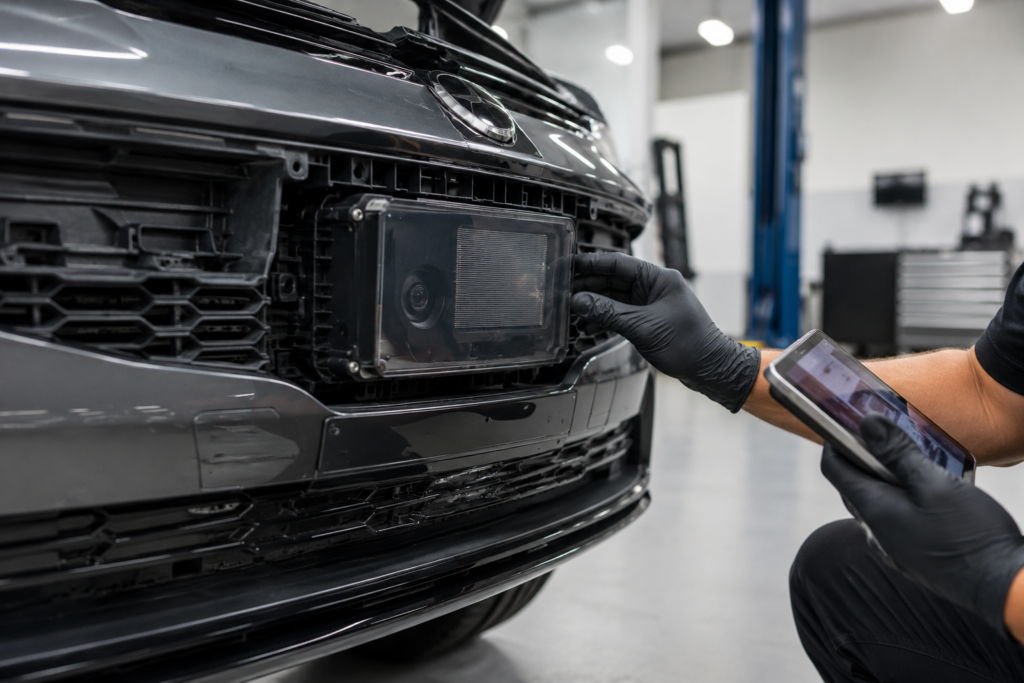
ADAS and PDR: What Every Shop Owner Must Know in 2026 Ten years ago, running a PDR shop meant knowing metal, knowing tools, and knowing how to read damage under a light. Today, those skills still matter — but the vehicles in your bays have changed dramatically. Advanced Driver Assistance Systems, or ADAS, are now standard equipment on most new vehicles leaving the lot. That shift is changing the PDR workflow in ways that not every shop has fully accounted for. The short version: if you’re repairing hail damage on a modern vehicle without checking what sensors are nearby, you may be creating liability you don’t know you have. What Is ADAS and Why Does It Matter for PDR? ADAS is the umbrella term for the suite of safety and convenience technologies that use sensors, cameras, and radar to monitor a vehicle’s surroundings. Adaptive cruise control, lane-keeping assist, automatic emergency braking, blind spot monitoring, and forward collision warning all fall under this category. These systems rely on precise sensor calibration. Specifically, even small changes in sensor alignment can affect system accuracy enough to trigger false warnings or, more critically, fail to trigger when the system should respond. Because these sensors are embedded in body panels — hoods, bumpers, A-pillars, rear fascias, quarter panels — PDR work performed near them carries calibration implications that conventional dent repair work did not. Furthermore, recalibration is not a simple reset. Depending on the vehicle make and model, it may require specialized scan tools, a controlled environment with specific target distances, and documentation of the completed procedure. In many cases, it’s a dealer or specialty shop procedure — not something every PDR shop can perform in-house. Which Vehicles Are Most Affected? The short answer is most of them built in the last three to four years. ADAS adoption has moved fast. As of 2024, forward collision warning and automatic emergency braking are standard on virtually all new passenger vehicles sold in the United States. Cameras and radar modules have followed. Practically, this means that any vehicle from the 2022 model year or newer should trigger an ADAS check at intake. Older vehicles in the 2018-2021 range may carry ADAS if they were higher trim levels or specific makes known for early adoption. When in doubt, look it up before you write the estimate. High-Risk Repair Zones for ADAS Not all PDR work on ADAS-equipped vehicles triggers recalibration requirements. The risk is concentrated in specific areas. Understanding those zones lets you triage quickly at intake. Front Fascia and Hood Front radar modules are often embedded in the grille area, behind the front emblem, or in the lower bumper cover. Hail damage to hoods that requires working near the front lip, or front bumper damage that requires R&I, may disturb radar alignment. Additionally, some hood sensors for rain detection or lighting control are mounted near the leading edge. Windshield and A-Pillar Area Forward-facing cameras are typically mounted at the top of the windshield or behind the rearview mirror bracket. Consequently, any PDR work on the upper hood or A-pillar area — even work that doesn’t directly contact the camera mount — may require recalibration if the glass is removed for access or if the bracket area is disturbed. Rear Fascia and Quarter Panels Rear parking sensors, blind spot monitoring radar, and rear cross-traffic alert modules sit in rear bumpers and quarter panels. Hail damage to rear quarters or trunk lids that requires R&I of rear fascia components carries calibration risk for these systems. How to Protect Your Shop: A Practical Checklist Building ADAS awareness into your standard process doesn’t require a major overhaul. Specifically, three process changes cover most of the risk. ✅ Flag ADAS at Intake Add an ADAS check to your intake form. Before writing the estimate, identify whether the vehicle has ADAS, which systems are present, and which body panels they’re associated with. Vehicle-specific information is available through the manufacturer’s technical service documentation, or through ADAS lookup tools that integrate with VIN decoders. ✅ Price Recalibration Into the Estimate If your shop performs recalibrations, make it an explicit line item on any estimate involving ADAS-adjacent panels. If you refer out to a dealer or specialty shop, include the referral cost estimate in your quote so the customer isn’t surprised. Either way, the customer should understand before the job starts that recalibration may be required and what it costs. Omitting recalibration from an estimate to close the job faster creates a gap between what the customer expects and what they owe — and it creates a gap between the repaired system state and the manufacturer’s calibration spec. Both gaps are problems. ✅ Document Everything in the Work Order For every job involving ADAS-equipped vehicles, your work order should note: which ADAS systems are present, which panels were repaired, whether recalibration was performed or referred, and who performed it. This documentation protects you if a customer later claims an ADAS system is malfunctioning after your repair. Without a documented record, you have no defense. With one, you have a clear record of what the vehicle’s state was when it left your shop and who is responsible for each step Should Your Shop Invest in In-House Recalibration? This question depends on your volume, your market, and your investment appetite. For a single-location shop doing moderate volume, the business case for in-house recalibration equipment is less clear — especially since most systems require manufacturer-specific scan tools and controlled calibration environments. The referral model (send to a dealer or calibration specialist) may be more practical. However, for multi-shop operators doing high volume on newer vehicle fleets, the math shifts. Adding recalibration as a billable in-house service increases revenue per job and eliminates the coordination friction of referring out. Furthermore, shops that can offer a complete repair — PDR plus recalibration — under one roof have a clear competitive advantage with insurance adjusters and fleet operators managing modern vehicle inventory. Vehicle Hub and ADAS Documentation Vehicle Hub’s estimate/work order

© 2026 VehicleHub, LLC. All rights reserved
Scroll to Top