
Hail Event

Blog Post 3
ADAS Repair, ADAS Systems, Auto Recondition, Dent Repair, Hail Damage, Hail Event, PDR Shop, PDR Technique, Recon Tech

ADAS and PDR: What Every Shop Owner Must Know

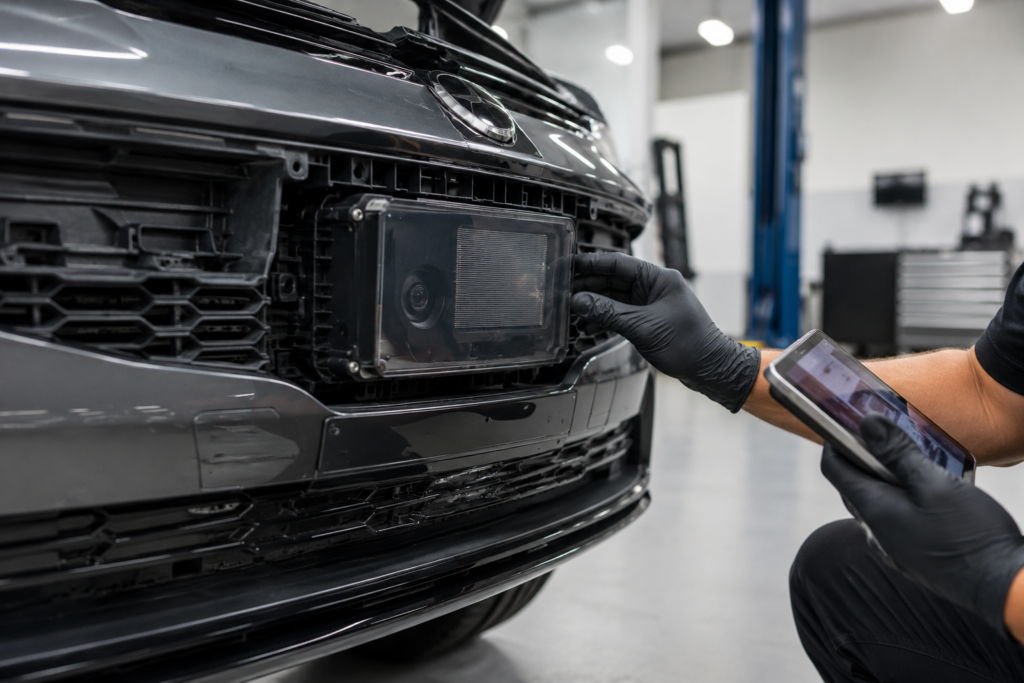
ADAS and PDR: What Every Shop Owner Must Know in 2026 Ten years ago, running a PDR shop meant knowing metal, knowing tools, and knowing how to read damage under a light. Today, those skills still matter — but the vehicles in your bays have changed dramatically. Advanced Driver Assistance Systems, or ADAS, are now standard equipment on most new vehicles leaving the lot. That shift is changing the PDR workflow in ways that not every shop has fully accounted for. The short version: if you’re repairing hail damage on a modern vehicle without checking what sensors are nearby, you may be creating liability you don’t know you have. What Is ADAS and Why Does It Matter for PDR? ADAS is the umbrella term for the suite of safety and convenience technologies that use sensors, cameras, and radar to monitor a vehicle’s surroundings. Adaptive cruise control, lane-keeping assist, automatic emergency braking, blind spot monitoring, and forward collision warning all fall under this category. These systems rely on precise sensor calibration. Specifically, even small changes in sensor alignment can affect system accuracy enough to trigger false warnings or, more critically, fail to trigger when the system should respond. Because these sensors are embedded in body panels — hoods, bumpers, A-pillars, rear fascias, quarter panels — PDR work performed near them carries calibration implications that conventional dent repair work did not. Furthermore, recalibration is not a simple reset. Depending on the vehicle make and model, it may require specialized scan tools, a controlled environment with specific target distances, and documentation of the completed procedure. In many cases, it’s a dealer or specialty shop procedure — not something every PDR shop can perform in-house. Which Vehicles Are Most Affected? The short answer is most of them built in the last three to four years. ADAS adoption has moved fast. As of 2024, forward collision warning and automatic emergency braking are standard on virtually all new passenger vehicles sold in the United States. Cameras and radar modules have followed. Practically, this means that any vehicle from the 2022 model year or newer should trigger an ADAS check at intake. Older vehicles in the 2018-2021 range may carry ADAS if they were higher trim levels or specific makes known for early adoption. When in doubt, look it up before you write the estimate. High-Risk Repair Zones for ADAS Not all PDR work on ADAS-equipped vehicles triggers recalibration requirements. The risk is concentrated in specific areas. Understanding those zones lets you triage quickly at intake. Front Fascia and Hood Front radar modules are often embedded in the grille area, behind the front emblem, or in the lower bumper cover. Hail damage to hoods that requires working near the front lip, or front bumper damage that requires R&I, may disturb radar alignment. Additionally, some hood sensors for rain detection or lighting control are mounted near the leading edge. Windshield and A-Pillar Area Forward-facing cameras are typically mounted at the top of the windshield or behind the rearview mirror bracket. Consequently, any PDR work on the upper hood or A-pillar area — even work that doesn’t directly contact the camera mount — may require recalibration if the glass is removed for access or if the bracket area is disturbed. Rear Fascia and Quarter Panels Rear parking sensors, blind spot monitoring radar, and rear cross-traffic alert modules sit in rear bumpers and quarter panels. Hail damage to rear quarters or trunk lids that requires R&I of rear fascia components carries calibration risk for these systems. How to Protect Your Shop: A Practical Checklist Building ADAS awareness into your standard process doesn’t require a major overhaul. Specifically, three process changes cover most of the risk. ✅ Flag ADAS at Intake Add an ADAS check to your intake form. Before writing the estimate, identify whether the vehicle has ADAS, which systems are present, and which body panels they’re associated with. Vehicle-specific information is available through the manufacturer’s technical service documentation, or through ADAS lookup tools that integrate with VIN decoders. ✅ Price Recalibration Into the Estimate If your shop performs recalibrations, make it an explicit line item on any estimate involving ADAS-adjacent panels. If you refer out to a dealer or specialty shop, include the referral cost estimate in your quote so the customer isn’t surprised. Either way, the customer should understand before the job starts that recalibration may be required and what it costs. Omitting recalibration from an estimate to close the job faster creates a gap between what the customer expects and what they owe — and it creates a gap between the repaired system state and the manufacturer’s calibration spec. Both gaps are problems. ✅ Document Everything in the Work Order For every job involving ADAS-equipped vehicles, your work order should note: which ADAS systems are present, which panels were repaired, whether recalibration was performed or referred, and who performed it. This documentation protects you if a customer later claims an ADAS system is malfunctioning after your repair. Without a documented record, you have no defense. With one, you have a clear record of what the vehicle’s state was when it left your shop and who is responsible for each step Should Your Shop Invest in In-House Recalibration? This question depends on your volume, your market, and your investment appetite. For a single-location shop doing moderate volume, the business case for in-house recalibration equipment is less clear — especially since most systems require manufacturer-specific scan tools and controlled calibration environments. The referral model (send to a dealer or calibration specialist) may be more practical. However, for multi-shop operators doing high volume on newer vehicle fleets, the math shifts. Adding recalibration as a billable in-house service increases revenue per job and eliminates the coordination friction of referring out. Furthermore, shops that can offer a complete repair — PDR plus recalibration — under one roof have a clear competitive advantage with insurance adjusters and fleet operators managing modern vehicle inventory. Vehicle Hub and ADAS Documentation Vehicle Hub’s estimate/work order
Blog Cover 2
Auto Recondition, Hail Event, Hail Season, PDR Shop, PDR Technique, Recon Tech

Local PDR Shop vs. Storm Chasers: Win on Your Turf

Local PDR Shop vs. Storm Chasers: Win on Your Turf Every summer, as soon as a significant hail storm touches down, the storm chasers arrive. They set up shop in a parking lot, hang a banner, and start working the phones. Their prices are lower. Their operation is lean. Here’s the thing, though: competing with storm chasers on price is a fight you’re not going to win — and you shouldn’t try. Your shop has costs they don’t carry. You pay rent twelve months a year, not just in June. You invest in training, equipment, and a team that’ll still be here after the storm chasers pack up and move on. The good news is that price isn’t the only thing customers care about. In fact, for the customers who matter most to your long-term business, it probably isn’t even the top factor. Trust is. And trust is something storm chasers can’t build in three weeks. Understanding What Storm Chasers Can and Can’t Offer Storm chasing operations are, in most cases, legitimate businesses staffed by real PDR techs. They follow major hail events from market to market, capitalize on the volume, and move on. Some do quality work. Others cut corners to maximize throughput during the window they’re in town. What they almost never offer is accountability after they leave. When a customer has a question about the job six months later, the chaser operation is two states away. There’s no one to call. There’s no warranty to lean on. The customer’s only option at that point is to live with it or pay someone else to fix it. Moreover, storm chasers rarely build relationships with insurance agents, dealers, or fleet managers in your market. They don’t have the time, and they don’t have the incentive. Those relationship channels are yours to own — if you’re working them. Compete on Trust, Not Price The customer choosing between your shop and a storm chaser is, at some level, making a bet. They’re betting on which one will still be around and accountable if something goes wrong. Your entire competitive position should be built around making that bet feel obvious. Be Transparent About Your Process Walk every hail customer through what you’re going to do and why. Show them the damage under a dent light before work starts. Explain what PDR can fully fix, where you might need to blend, and why that access point behind the tail lamp adds a little time. Customers who understand the process are customers who trust the outcome. Furthermore, a written estimate they can read and keep builds confidence that a verbal quote from a tent never will. Professional documentation communicates permanence. Offer a Real Warranty Storm chasers rarely offer warranties they can honor after they leave town. If your shop stands behind its work with a written warranty, say so — clearly, on every estimate and invoice. That warranty is worth something real to a customer weighing their options. Additionally, make the warranty specific. Vague language like ‘satisfaction guaranteed’ means less than ‘we warrant all PDR work against re-pop for 12 months.’ Specificity signals confidence. Make Follow-Through Easy One of the biggest differentiators between a local shop and a storm chaser is what happens after the job is done. Call the customer when the vehicle is ready — don’t just text. Follow up a week later to make sure they’re happy. Keep their job record on file so if they call back with a question, you can pull it up immediately. That kind of follow-through takes ten minutes and creates customers who send you their family members, their coworkers, and their neighbors the next time a storm rolls through. Build the Relationships Storm Chasers Can’t Storm chasers rely on visibility and volume. Local shops can compete on relationships that take years to build and can’t be replicated in a parking lot tent. Insurance Agents When a hail event hits your market, insurance agents see every claim filed in that area. Agents who trust your shop recommend you to customers who are overwhelmed and need guidance. That referral costs you nothing and comes with built-in credibility. Building that relationship means visiting agents before the season, providing them with a clear explanation of your process, and making yourself the easiest call for them to make. Bring lunch. Send a handwritten note after a good referral. These gestures cost almost nothing and pay off disproportionately. Auto Dealers Independent dealers recondition vehicles regularly and need a reliable PDR partner they can count on for pre-sale work. Establishing yourself as that partner before storm season means you get steady volume even in the off months — and when a storm hits, you’re already the call they make. Your Own Past Customers our existing customer base is your most underutilized asset during storm season. If you have their contact information and a record of their previous work, reach out when a significant hail event hits your market. Not with a hard sell — with a heads-up. ‘We just wanted to let you know we’re taking appointments and can get you in quickly.’ Customers who’ve already trusted you once are highly likely to come back. Consequently, a shop management system that keeps your customer records organized and searchable is not a luxury item. It’s the infrastructure that makes this kind of outreach practical. When They Go With the Chaser Anyway Some customers will choose the lower price. Accept that gracefully. Hand them a business card, wish them well, and mean it. They’ll be back — either because the work didn’t hold up, or because the next storm comes through and they remember the shop that treated them right even when they didn’t choose it. Long-term, the storm chasers are not your competition. Your real competition is every reason a customer might not think of you first. Fix that, and the chasers become irrelevant. How Vehicle Hub Helps Local Shops Win Vehicle Hub gives PDR shops the professional infrastructure that storm chasers

Vhub Shop Image
Dent Repair, Hail Event, Hail Season, PDR Shop

How to Manage a High-Volume Hail Event at Your PDR Shop

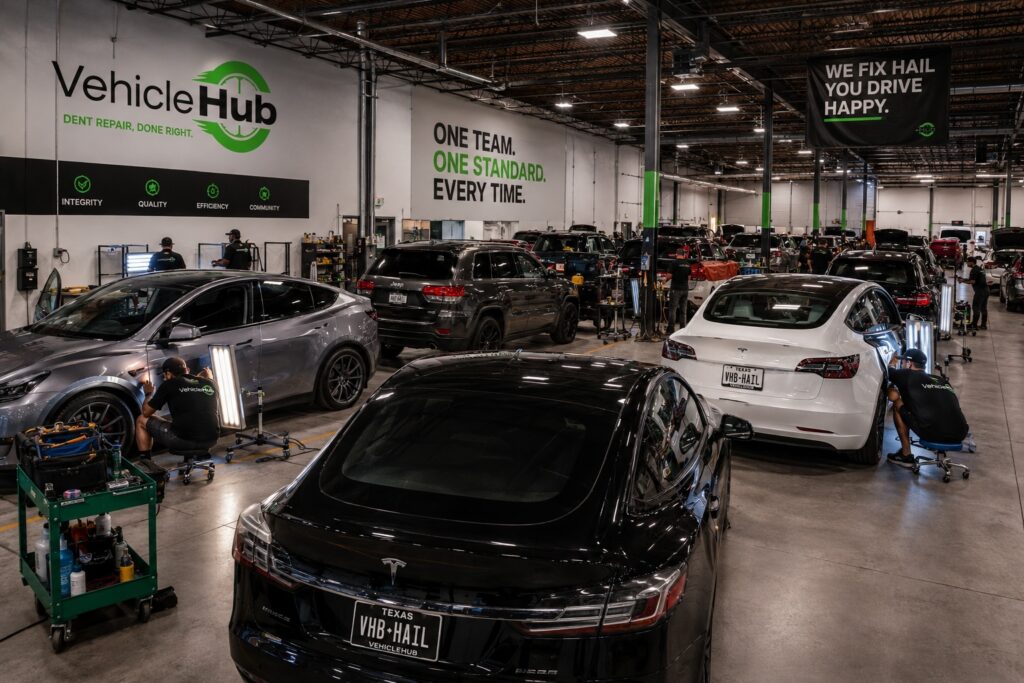
How to Manage a High-Volume Hail Event at Your PDR Shop A couple hundred cars. Three days. One shop. That’s the scenario waiting for PDR shops in hail season, and the difference between a shop that handles it well and one that comes out the other side exhausted, behind on billing, and losing customers to communication breakdowns — isn’t skill level. It’s systems. This guide is a ground-level breakdown of how high-performing PDR shops manage major hail events without losing their minds or their margins. These aren’t theoretical best practices. They’re the actual operational moves that keep throughput high when volume spikes hard. The First 24 Hours Set the Tone The moment you know a significant storm has passed through your market, the clock starts. The shops that come out ahead are already moving before the phones start ringing. Get Eyes on Your Lot and Assess Capacity Before you take a single call or commit to an intake volume, you need to know exactly how many cars your shop can realistically process per day. Not how many you’d like to handle — how many you can actually deliver, fully worked, in a day. Count your functional bays, your available techs, and your typical output per tech on moderate hail. That’s your daily capacity ceiling. Overcommitting in the first 48 hours is how shops end up with angry customers and a backlog that drags into month two. Set Up a Staging Area Outside Your Bays Your bays are for working cars. Everything else — intake, triage, waiting, and finished cars — needs to happen outside the bays. Set up a clearly defined staging area before the first cars arrive. Cars waiting for tech assignment go here. Cars done but waiting for pickup go here. Bays stay clear for production. Triage Every Car Before It Enters a Bay This is non-negotiable for volume events. Every car gets a damage walk-around and a severity classification — quick, moderate, complex — before it ever enters a production bay. This is what keeps your best techs working on jobs that need their skill level, and prevents mismatched assignments from killing your hourly throughput. Role Separation Is What Scales When a shop runs on one person knowing everything, it tops out at what one person can track. High-volume hail events expose this ceiling fast. Designate an Intake Owner One person — and only one — owns customer intake during a hail event. They take the calls, collect info, schedule drop-offs, set expectations on turnaround time, and make sure every incoming car has its information logged before it hits the lot. This person does not work the bays. Their entire job is the front of the pipeline. Designate a Floor Coordinator This is the person who knows where every car is at every moment. They move cars from staging to bays, assign jobs to techs, field questions from techs mid-job, and make sure finished cars go back to staging and not back into the production flow. In smaller shops, this might be the owner. In larger ones, it needs to be a dedicated role during peak events. Let the Techs Tech Your skilled PDR technicians should be spending the maximum possible time with tools in hand. Every minute they spend walking across the shop to find paperwork, talk to a customer, or wait to find out their next job is lost production. The roles above exist specifically to protect tech time. One Source of Truth for Job Status The single most common operational failure during high-volume hail events is a lack of shared, real-time job status visibility. When different people in the shop have different answers to the question ‘where’s that silver Camry?’ — you have a problem. Pick One System and Use It Consistently It doesn’t matter whether it’s a whiteboard with magnets, a shared spreadsheet, or a shop management app — pick one system and make it the only system. No parallel paper lists. No mental tracking. The system is the authority. Vehicle Hub is built specifically for this use case. The app lets your intake person log a vehicle and its info at check-in, your floor coordinator track job status in real time, and your front desk send invoices without having to chase down completion info. Everyone on the same page without a single phone call. Update Status at Every Stage Gate Define the stage gates in your process — checked in, triaged, assigned, in progress, complete, delivered, invoiced — and make it a requirement that status gets updated at each one. If a car is sitting and nobody knows why, that’s a visibility failure, not a people failure. Build the update habit into the workflow, not as an afterthought. Communication With Customers During a Hail Event Hail events spike customer anxiety. People don’t know how bad their car is, they don’t know when they’ll get it back, and they’re worried about insurance. The shops that handle this well set expectations explicitly at intake and then follow up proactively — they don’t wait for the customer to call. Set a realistic completion window at check-in, give a specific follow-up date (not ‘we’ll call you’), and hit that follow-up whether or not the car is done. A quick update call even when there’s nothing new to report does more for customer retention than a perfect job with no communication. With Vehicle Hub, you can log customer contact info and job notes at intake, so follow-up doesn’t depend on whoever took the original call remembering the details. After the Event: The Debrief That Pays for Itself When the last car goes out and the lot is clear, the most valuable thing a shop owner can do is a structured debrief before the details fade. What did daily throughput actually look like vs. your capacity estimate? Where did jobs stall? Which role had the most bottlenecks? What customer complaints came up and why? Which vehicles or damage types took longer than expected? The answers to these

© 2026 VehicleHub, LLC. All rights reserved
Scroll to Top