
PDR Shop Networking

PDr Referral
PDR Referral Program, PDR Shop, PDR Shop Networking, Recon Tech

PDR Referral Program: Turn Customers Into Salespeople

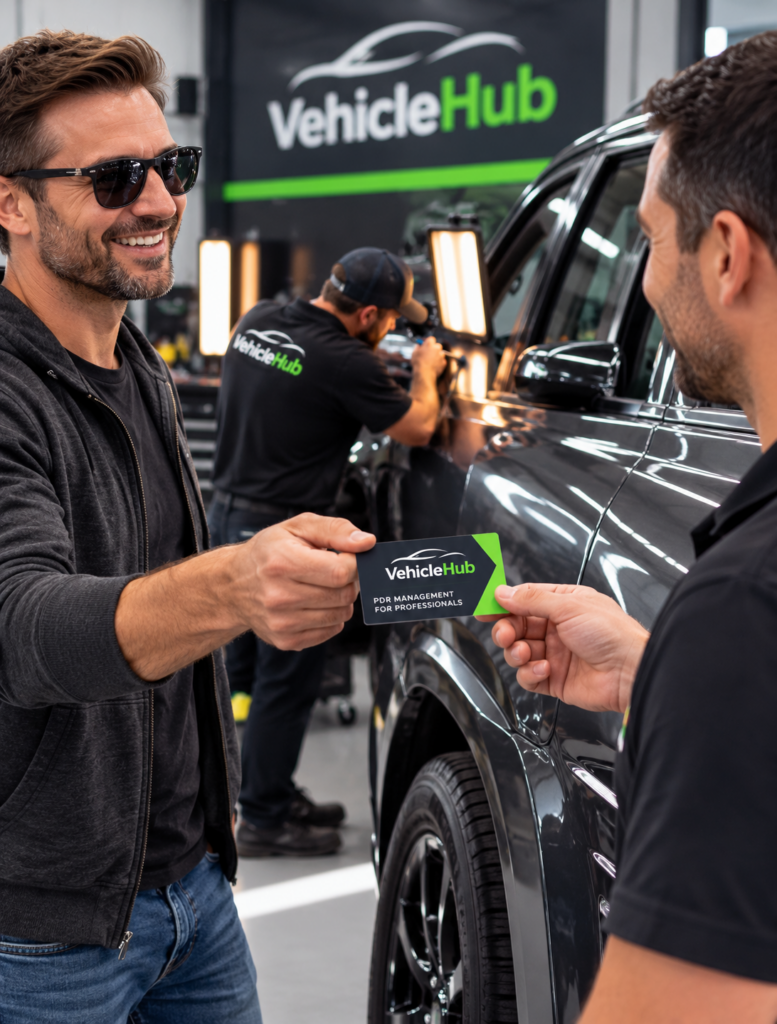
PDR Referral Program: Turn Customers Into Salespeople Slow season is here, and the phone rings less. This is exactly when a PDR referral program earns its keep. Your best customers already trust you. They already tell friends about the guy who popped out their hail dents without touching the paint. A referral program gives that word-of-mouth a structure. It adds a reward, and a way to track where new business actually comes from. Most shops rely on referrals by accident. Few shops build them on purpose. This guide walks through how to change that before the next hail season hits. Fall is the ideal time to build one. Hail volume drops and senior techs get some breathing room. Shops that use this window well walk into next spring’s storm season with more capacity, instead of the same tight crew stretched thin again. Why a PDR Referral Program Beats Paid Ads Right Now Paid ads cost money whether or not they convert. A referral, on the other hand, only costs you something once a real customer walks through the door. Referred customers also close faster. A friend already vouched for you, so trust exists before the estimate even starts. That means less skepticism and fewer questions than a typical first-time customer brings. Additionally, referral customers tend to have higher lifetime value. They come back for future work, and they refer other people, too. Consumer research on word-of-mouth marketing consistently shows referred customers stick around longer than customers acquired through advertising. That compounding effect is why a referral program keeps paying off long after the hail season it launches in. Building the Incentive Structure Keep the offer simple. A flat discount on the referrer’s next service, plus a smaller welcome discount for the new customer, works well for most PDR shops. Complicated tiered programs confuse customers, and confused customers don’t refer anyone. Consider these three pieces before you launch: What the referrer gets, and when they get it. A discount that pays out after the referred customer’s job completes keeps the incentive tied to a real, paid job. What the new customer gets. A small welcome discount lowers the barrier for someone who’s never used your shop before. How you’ll track who referred whom. Without tracking, you can’t pay out rewards accurately, and you can’t measure whether the program is actually working. Making the Ask at the Right Moment Timing matters more than most shops realize. The best moment to ask for a referral is right after the customer sees their vehicle for the first time post-repair. That’s the emotional peak, when the dent is gone and the customer is genuinely impressed. Waiting a week to ask, buried in a follow-up email, misses that window entirely. Train your front-of-house staff or techs to make a simple, direct ask: “If you know anyone else dealing with hail damage, send them our way, and you’ll both get a discount.” No script needed beyond that. Consequently, the ask feels natural instead of like a sales pitch. Tracking Your PDR Referral Program Without Losing Your Mind Here’s where most PDR referral programs quietly fail. A shop launches the idea, gets excited, and then loses track of who referred whom within a month. Sticky notes and memory don’t scale, especially across multiple locations. This is where a shared system matters. The Vehicle Hub app keeps every customer’s contact info, service history, and notes in one place, so when a new customer mentions who sent them, that referral gets logged against both records instantly. Your team pulls a report at any point to see which customers are your strongest referral sources. Rewarding them becomes simple from there. For multi-shop operators, that visibility works the same way across locations, whether the referral happened at your original shop or one three towns over. Tracking referrals accurately also protects trust. Nothing kills a referral program faster than a customer who refers a friend and never gets their discount because nobody wrote it down. Measuring What Actually Works Track three numbers each month: total referrals logged, referrals that converted to paid jobs, and average job value from referred customers versus non-referred customers. If referred customers are worth more and close faster, that data justifies the investment. Consider bigger incentives or more visible promotion in the shop once the numbers back it up. PDR Nation’s community forums are a good place to compare notes with other shop owners running similar programs, and Auto Body News regularly features shops that built their growth on referral-driven marketing rather than paid ads. Frequently Asked Questions How much should I offer for a PDR referral program incentive? Most shops start with $25 to $50 off the referrer’s next service, plus a similar welcome discount for the new customer. Adjust based on your average job value. Should the referral discount apply to hail repair jobs only? No. Applying it across all services, including detailing or glass work, encourages more referrals and keeps the program simple to explain. How do multi-shop operators run one referral program across all locations? A shared customer database is essential. Without one, a referral at Shop B for a customer originally served at Shop A gets missed entirely. What’s the biggest reason PDR referral programs fail? Poor tracking. If a shop can’t confirm who referred whom, rewards go unpaid, trust erodes, and the program dies quietly within a few months.
SEMA
Auto Body Trade Show, Dent Repair, Dent Repair Tools, PDR Equipment, PDR Shop Networking, PDR Tools, SEMA, Uncategorized

SEMA Show Prep for PDR Shop Owners: A Full 2026 Guide

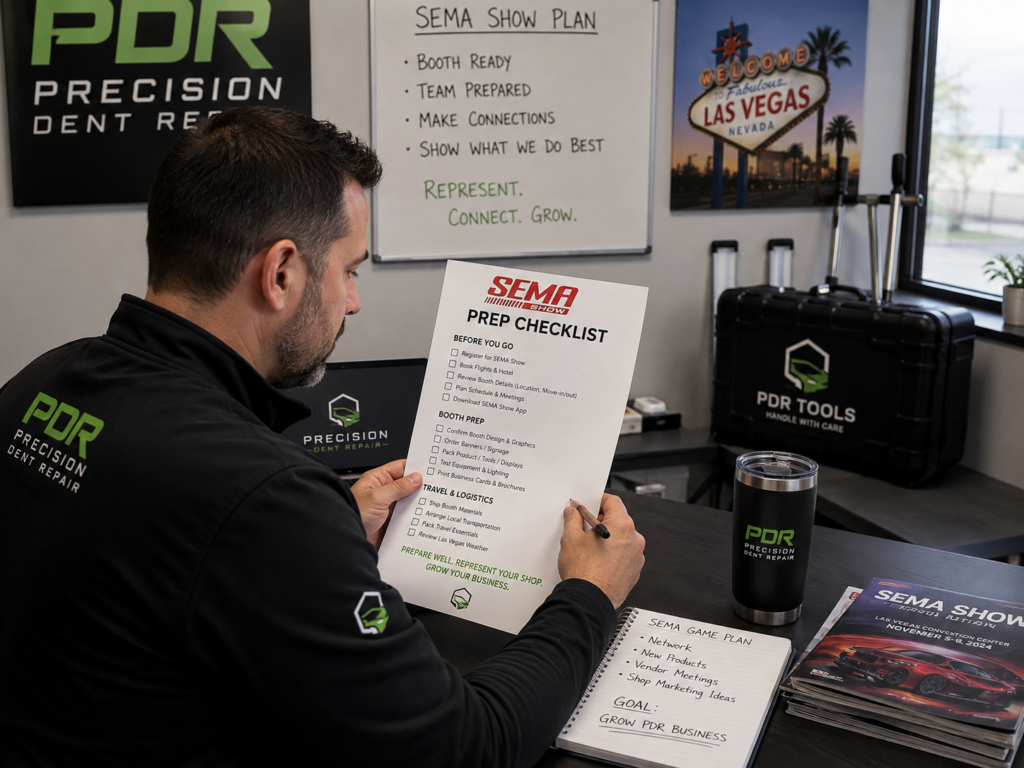
SEMA Show Prep for PDR Shop Owners: A Full 2026 Guide SEMA Show prep shouldn’t start the week before you fly out. This year’s show runs November 3-6, 2026, at the Las Vegas Convention Center. The shop owners who get real value out of it plan in September and October. They don’t wander the floor in November hoping something catches their eye. For PDR shop owners, SEMA Show prep means more than booking a flight. It means setting a budget and defining what problem you’re actually trying to solve. A real plan means the trip pays for itself, instead of just costing four days and a hotel bill. Start SEMA Show Prep With a Clear Budget Before anything else, decide what you’re willing to spend on equipment this trip. Then stick to it. Booth demos and show-floor discounts are designed to create urgency. It’s easy to walk out having spent triple what you planned on gear you never researched. Set a number in advance. Treat anything beyond it as a “think it over” purchase, not an impulse buy. Multi-shop operators should also decide ahead of time where this year’s spending goes. Does it go toward one location’s upgrade, or does it spread across all of them? That decision is much easier to make at your desk in September than on a convention floor in November. Know What Problem You’re Solving Walking SEMA without a specific goal usually means coming home with tools that look impressive but don’t solve anything. Instead, write down two or three actual pain points before you go. Maybe your dent lights are outdated. Perhaps you need a better glue-pull system. Or maybe your bottleneck isn’t equipment at all. Notably, a lot of shops that feel like they need new tools actually have an operations problem. Your techs might have great gear, but if your estimates, work orders, and invoices are still scattered across paper and text messages, no dent light on the SEMA floor will fix that. Build Your Show Schedule Around Education, Not Just Vendors SEMA runs technical sessions and panels alongside the vendor floor. Shop owners frequently skip them entirely. These sessions often cover exactly the multi-shop scaling, hiring, and operations challenges that PDR owners deal with year-round. According to the Automotive Aftermarket Suppliers Association, session topics get updated each year to reflect current trends across the specialty equipment market. Check the schedule before you arrive, rather than deciding on the fly. Additionally, SEMA is one of the few times all year multi-shop operators can talk directly with techs from other regions. Block time for informal networking, not just scheduled meetings. Some of the best insight comes from a ten-minute hallway conversation with someone running a shop three states over. Bring the Right People If your shop is small, it might just be you. However, larger and multi-shop operations should think carefully about who else makes the trip. A lead tech evaluates new tools with a different eye than an owner focused on the business side. Bringing one tech alongside ownership often results in better equipment decisions than either person going alone. Compare Notes with Trusted Industry Sources Before finalizing any major equipment purchase, cross-reference show-floor claims against outside reviews. SEMA (sema.org) publishes exhibitor previews and new-product announcements ahead of the show each year. That’s a useful way to plan your floor route in advance, rather than discovering booths at random. PDR Nation forums are also a reliable place to see real shop owners discuss which tools from previous years actually held up. Auto Body News (autobodynews.com) rounds out the picture with broader coverage of new equipment trends across the collision and reconditioning industry. Don’t Let Your Back Office Fall Behind While You’re Gone Estimates, work orders, and invoices should all live in a system you can check from your phone. That way, a four-day trip doesn’t mean four days of blind spots back home. Vehicle Hub lets owners check every location’s active work orders and outstanding invoices from anywhere. A trip to SEMA doesn’t require choosing between attending the show and staying on top of the business. Techs back home keep working normally. Everything they log becomes visible the moment you check your phone between sessions. Frequently Asked Questions About SEMA Show Prep When is the SEMA Show in 2026? The SEMA Show runs November 3-6, 2026, at the Las Vegas Convention Center. It’s a trade-only event, open to the general public only on Friday, November 6. How far in advance should SEMA Show prep start? Most shop owners benefit from starting SEMA Show prep six to eight weeks out. That gives enough time to set a budget, identify goals, and review the exhibitor list. Is SEMA worth it for a single-location PDR shop? Yes, though the value looks different than for multi-shop operators. Single-location owners often get the most value from technical sessions and networking, rather than large equipment purchases. What should a PDR shop owner prioritize at SEMA: tools or software? It depends on the shop’s actual bottleneck. Shops with solid equipment but disorganized estimates and invoices typically get more value from fixing their back-office systems than from new tools. Head Into SEMA With a Plan, Not Just a Wish List SEMA Show prep pays off when you walk in knowing exactly what you’re solving for. While you’re setting your budget and goals for November, make sure the systems back at your shop are just as dialed in. Download Vehicle Hub and manage every location’s estimates, work orders, and invoices from your phone, whether you’re on the shop floor or the SEMA floor.

© 2026 VehicleHub, LLC. All rights reserved
Scroll to Top