PDR Subcontractor Management: Building a 1099 Bench
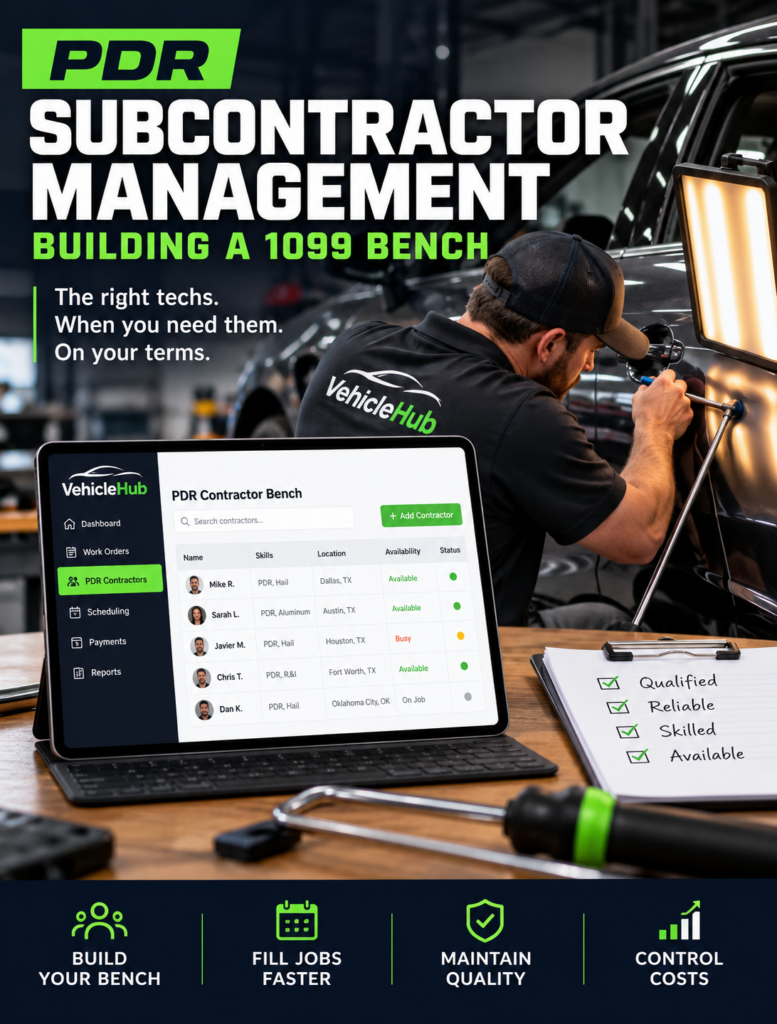
PDR Subcontractor Management: Building a 1099 Bench Hail season thins out fast. So does your tech roster. PDR subcontractor management is how smart multi-shop operators keep a bench of skilled hands ready without carrying full-time payroll through the slow months. Done wrong, it creates tax exposure and quality gaps. Techs ghost you mid-job. Done right, it gives your shop flex capacity you can scale up or down with demand. This guide covers what actually works. You’ll get a structure for the relationship, the terms that belong in a contract, and a way to keep quality consistent when the tech isn’t your employee. Fall is the ideal time to build one. Hail volume drops and senior techs get some breathing room. Shops that use this window well walk into next spring’s storm season with more capacity, instead of the same tight crew stretched thin again. What PDR Subcontractor Management Actually Involves Subcontractor management isn’t just signing a 1099 and hoping for the best. It means setting clear expectations before the first job starts. Tracking who worked which vehicle, at what rate, and under what warranty terms comes next. Additionally, a good system separates subcontractor work orders from your in-house techs’ work. Nothing gets lost when tax season or an insurance audit rolls around. Multi-shop operators feel this pain the most. A tech might run panels at three locations in one week. Without a shared system, each shop manager tracks that tech’s hours separately. Reconciling pay at month’s end turns into a scavenger hunt. Workforce shortages across the collision and recon trades make this bench-building even more urgent; SEMA’s industry research has flagged technician availability as a top concern for shop owners heading into 2027. 1099 vs. W-2: Picking the Right Structure The IRS draws a real line between an employee and an independent contractor. That difference isn’t optional paperwork. According to the IRS common law rules, the key test is behavioral and financial control. Does your shop dictate exactly how, when, and where the work happens? Or does the tech control their own methods and schedule? A subcontractor should supply their own tools. Setting their own hours within reason should be their call, too. Taking on other clients, if they want to, should never be off the table. Misclassifying a tech as a 1099 when they function like an employee creates real liability. Consequently, talk to your accountant before you bring on your first subcontractor. Walk through the IRS test together. That’s a short conversation now instead of a costly one later. Contracts That Protect Your Shop and Your Techs A handshake deal feels fast. However, it falls apart the moment a dent comes back or a payment gets disputed. Every subcontractor agreement should spell out the pay rate per panel, the payment timeline, who owns comeback repairs, and what happens on a no-show. Specificity matters here. Instead of “pay per job,” write “pay per panel at the agreed dent-mapping rate, paid within 5 business days of invoice approval.” Instead of “quality standards apply,” name the standard directly. No visible high spots. Correct blending on adjacent panels. A passed final inspection before the vehicle releases. Clear terms prevent the disputes that eat up your week. Quality Control Without Micromanaging You can’t stand over a subcontractor’s shoulder the way you would a new hire. Nor should you want to. Instead, build quality control into the workflow itself. Require photo documentation of the dent map before the repair starts, then another set once it finishes. A final walk-around sign-off, before the vehicle leaves the bay, should be non-negotiable. These checkpoints protect your shop’s reputation. They also keep the relationship from turning adversarial. Some shops run a short probation period. The first three to five jobs get extra inspection. After that, the subcontractor earns more autonomy. This approach builds trust gradually, and it catches technique gaps before they become customer complaints. Auto Body News regularly covers quality-control practices from shops managing mixed employee and contractor crews, and the same principles apply directly to PDR. Where PDR Subcontractor Management Gets Easier The biggest headache in managing subcontractors across multiple shops is fragmented records. One tech works three locations, and three different notebooks or spreadsheets end up tracking their jobs. Pay disputes start this way. Comeback repairs slip through the cracks the same way. This is exactly the gap the Vehicle Hub app closes. Every job a subcontractor completes gets logged under that vehicle’s work order. The record shows the tech’s name, the panel count, the rate, and the photos. A tech might work your downtown location on Monday and your second shop on Wednesday. Either way, the record lives in one place. Your office manager pulls a single report at month’s end instead of chasing three separate logs. Estimates, invoices, and customer history all stay attached to the vehicle, not scattered across whoever happened to write it down. For multi-shop operators juggling a rotating bench of subcontractors, that single source of truth makes the difference between a system and a mess. Frequently Asked Questions Do I need a written contract for a 1099 PDR tech, or is a verbal agreement enough? Get it in writing every time. A verbal agreement leaves no record of pay rate or warranty terms. Disputes become nearly impossible to resolve fairly. How many subcontractors should a mid-size PDR shop keep on the bench? Most multi-shop operators keep two to four reliable subcontractors per location for hail season flex. They trim back to their core in-house crew during slower months. Can a subcontractor work for more than one PDR shop at the same time? Yes. That’s actually a sign of proper 1099 classification. A true independent contractor sets their own schedule and can take work from multiple shops. What’s the biggest mistake shops make with PDR subcontractor management? Treating subcontractors like employees while paying them like contractors. If you’re dictating their hours, methods, and daily schedule, you may carry misclassification risk regardless of what the contract says.