
Cold Weather PDR: Adjusting Technique as Temps Drop
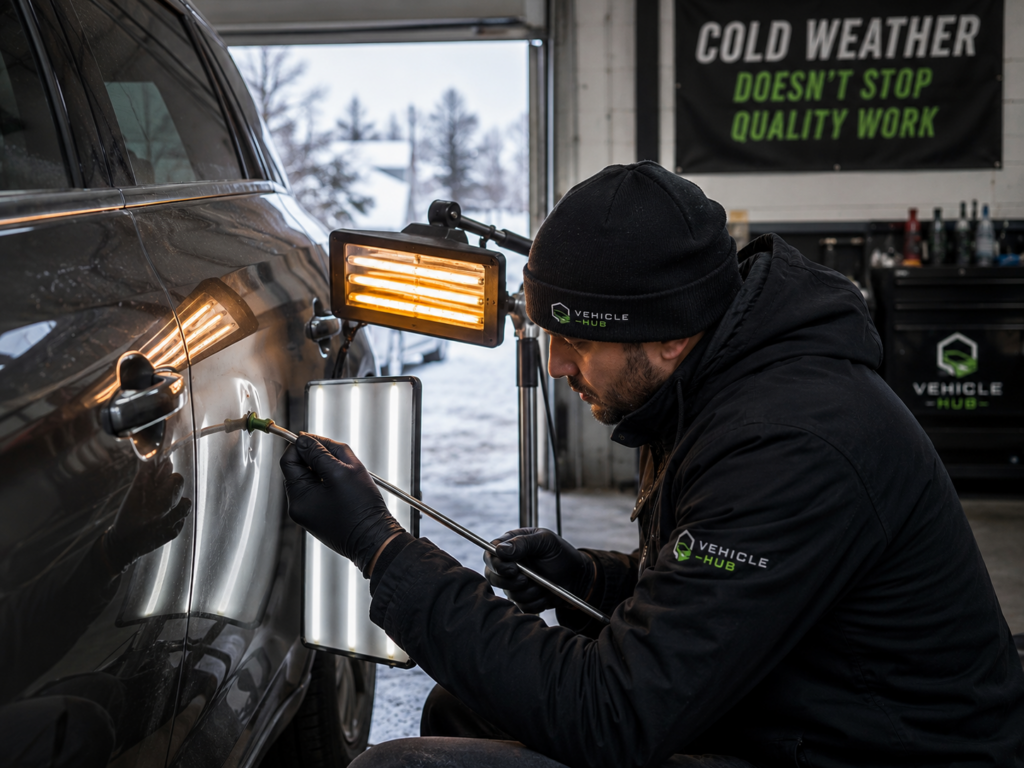
Cold Weather PDR: Adjusting Technique as Temps Drop Metal doesn’t move the same way in October as it does in July. Every experienced tech knows it. Cold weather PDR requires real adjustments, not just a heavier jacket. As temperatures drop through fall, panels get stiffer and tension changes. The margin for error on a clean pull shrinks. Shops that ignore this seasonal shift end up with slower repairs and more cracked paint. Techs get frustrated wondering why a routine door ding suddenly fights back. Understanding cold weather PDR isn’t optional once the season turns. It’s the difference between a smooth repair and a comeback. Why Cold Weather PDR Changes Panel Behavior Steel and aluminum both lose flexibility as temperatures drop. A panel that gives easily at 75 degrees can feel almost brittle at 40. The same push that popped a crown cleanly in August can crack paint in November. A tech has to adjust force and technique to match the season. Aluminum panels are especially sensitive. They tend to work-harden faster in cold conditions. Repeated tension in the same spot builds resistance quickly. Techs who don’t account for this often find themselves fighting the metal instead of working with it. Heat Is Your Best Tool in Cold Weather PDR Every shop doing cold weather PDR work should have a reliable heat source on hand. Infrared heat lamps or heat guns restore some of the panel’s warm-weather flexibility before a pull even starts. Warming the panel to a moderate, consistent temperature reduces cracking risk. It also makes tension easier to control. However, heat has to go on evenly. A panel that’s warm in one spot and cold six inches away behaves unpredictably mid-repair. Therefore, many techs warm a wider area than they think they need. Then they work from the center out. Adjust Your Glue-Pull Approach Glue-pull repairs are particularly sensitive to cold. Adhesive cure times run longer in cold shop bays. A tab that sets in five minutes during summer might need eight or ten minutes in a chilly fall bay. Rushing a glue pull before the adhesive fully cures is one of the most common comebacks this time of year. Additionally, glue viscosity itself changes with temperature. Cold adhesive can go on thicker and uneven, which weakens the bond. A warm bay, or a few minutes of gentle heat on the glue tab, solves most of this. Watch Your Access and Blend Work Access points behave differently too. Interior trim, clips, and plastic fasteners get more brittle in cold weather. R&I work that’s routine in summer can crack clips in a cold shop. Slow down slightly during removal and reinstallation when temperatures drop, especially on older vehicles with sun-weathered plastic. Blend work near panel edges also needs extra attention. Cold metal transmits tension differently near seams and body lines. Blending a repair close to an edge in November may take a few more passes than the same repair would in July. Building Cold Weather PDR Into Your Shop’s Routine The best shops don’t treat this as a one-off adjustment. They build it into fall training and scheduling every year. Guidance published by the National Highway Traffic Safety Administration (nhtsa.gov) documents how temperature-driven changes in metal behavior affect vehicle materials across the automotive repair industry. This isn’t just anecdotal shop knowledge; it’s a documented factor. Meanwhile, PDR Nation offers technique breakdowns specific to seasonal tension changes, worth reviewing with your team each fall. SEMA (sema.org) also publishes seasonal maintenance guidance that touches on how weather affects repair equipment and materials. Multi-shop operators should make sure every location follows the same cold-weather protocol. Otherwise, one shop might warm panels correctly while another rushes through repairs the same way it did in August. That gap leads to inconsistent quality across locations. Tracking the Time Difference Cold weather PDR repairs often simply take longer, and that needs to show up in your estimates. A crown that took twenty minutes in summer might take thirty in November, once you factor in warm-up time and slower glue cure. Estimating tools that ignore seasonal timing can leave techs feeling rushed. They can also leave shops underbilling for the actual labor involved. Vehicle Hub’s mobile app lets techs log time and notes directly against a work order in real time. Seasonal adjustments in labor time get captured accurately instead of estimated from memory weeks later. That data also helps owners see, across every location, how much longer fall and winter repairs actually take compared to peak season. Frequently Asked Questions About Cold Weather PDR Does cold weather really affect paintless dent repair that much? Yes. Cold weather PDR involves stiffer metal, longer glue cure times, and more brittle plastic components. All of that changes technique and timing. What temperature should a shop bay be for PDR work? Most techs find a bay between 65 and 75 degrees ideal. Below that, heat lamps or heat guns become necessary tools for consistent results. Is aluminum harder to repair in cold weather than steel? Generally, yes. Aluminum work-hardens faster in cold conditions, so techs need to manage tension and repeated pulls more carefully than with steel panels. Should techs charge more for cold weather repairs? Many shops build a seasonal time adjustment into their labor estimates. Cold weather PDR repairs typically take longer than the same repair in warm weather. Keep Your Fall Repairs Consistent Fall temperatures don’t have to mean inconsistent quality or slower turnaround. Train your team on seasonal technique now. Use Vehicle Hub to track real repair times and keep every estimate accurate as the temperature drops.