Insurance DRP Guide for PDR Shops in 2026
Insurance DRP Guide for PDR Shops: How to Build Referral Relationships That Drive Revenue
For PDR shop owners looking to grow beyond organic traffic and word-of-mouth, Direct Repair Program (DRP) relationships with insurance carriers represent one of the most consistent volume drivers available — especially during hail season.
This guide covers what DRP relationships are, how to get on carrier preferred vendor lists, what carriers expect from participating shops, and how to position your operation to win and keep those referrals.
What Is a DRP Relationship and Why Does It Matter for PDR Shops?
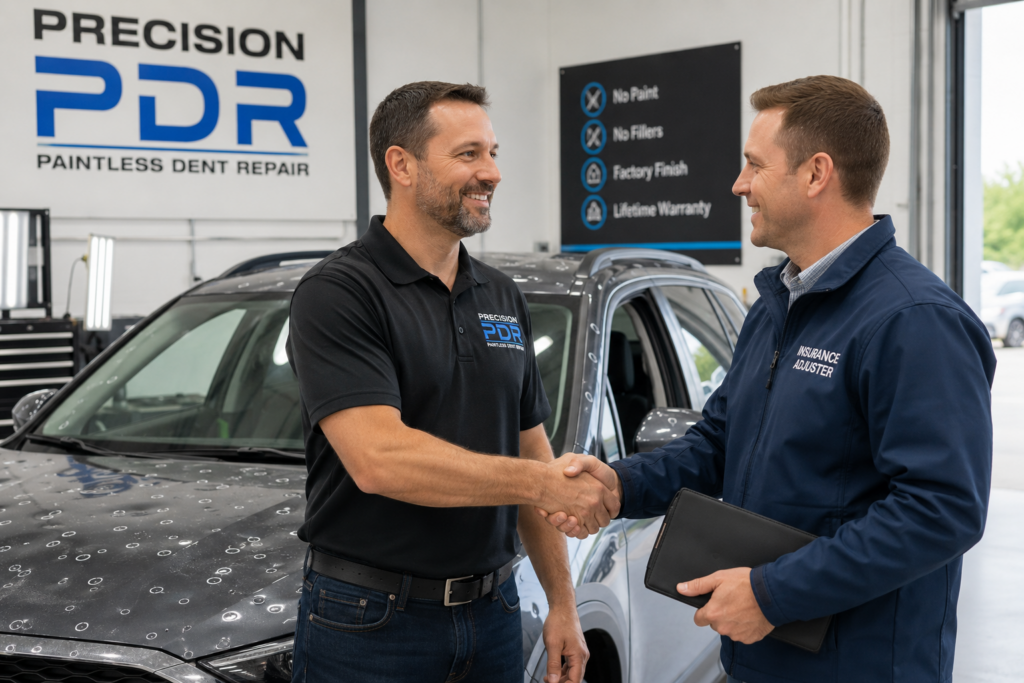
A Direct Repair Program is an arrangement between an insurance carrier and a repair shop where the carrier agrees to route vehicle damage claims directly to that shop without requiring the customer to shop around for their own repair facility. In exchange, the shop agrees to meet carrier standards for quality, documentation, response time, and pricing.
For PDR shops, DRP relationships are particularly valuable during hail events. When a storm causes widespread damage, the carrier receives hundreds of claims simultaneously. Shops on the preferred vendor list get routed referrals immediately. Shops not on the list compete only for the customers who choose to come in on their own — a fraction of the potential market.
In practical terms: a PDR shop with two strong DRP relationships in an active hail market can see 30-50% of their storm-season volume come through carrier referrals. That’s leads with no marketing cost attached.
How DRP Credentialing Works
The credentialing process varies by carrier but generally follows a similar path. Plan for 60-90 days from initial contact to active referral status. For shops targeting summer hail season, that means starting outreach in April or May.
Typical credentialing steps:
- Initial contact with the carrier’s vendor relations or network development team. Most major carriers have a shop network page or regional contact on their website.
- Application submission. Carriers typically request proof of business license, garage liability insurance at specified coverage levels, technician certifications (I-CAR and manufacturer certifications are common requirements), and shop facility information.
- Site inspection. Many carriers send a field auditor to verify facility condition, equipment, and operational standards.
- Documentation and process review. Carriers want to see your estimate process, quality control procedure, and customer communication workflow.
- Agreement execution. You’ll sign a participating shop agreement outlining pricing caps, turnaround time commitments, and quality warranty expectations.
- Activation. Once credentialed, your shop appears in the carrier’s preferred vendor network and begins receiving routed referrals.
What Carriers Look For in a PDR Shop
Insurance carriers are making a brand trust decision when they add a shop to their DRP network. Their customers will experience your shop as an extension of the carrier’s service — so they’re evaluating your operation on multiple dimensions.
Quality and consistency: Carriers want shops with a documented quality process, not just good techs. Before/after photo documentation, a defined inspection protocol, and a clear warranty policy all signal that your quality is repeatable, not just occasionally good.
Estimate accuracy and speed: Carriers evaluate how quickly shops deliver estimates and how accurate those estimates prove to be versus actual repair costs. Shops that consistently deliver same-day estimates and close to their initial quote build strong carrier relationships.
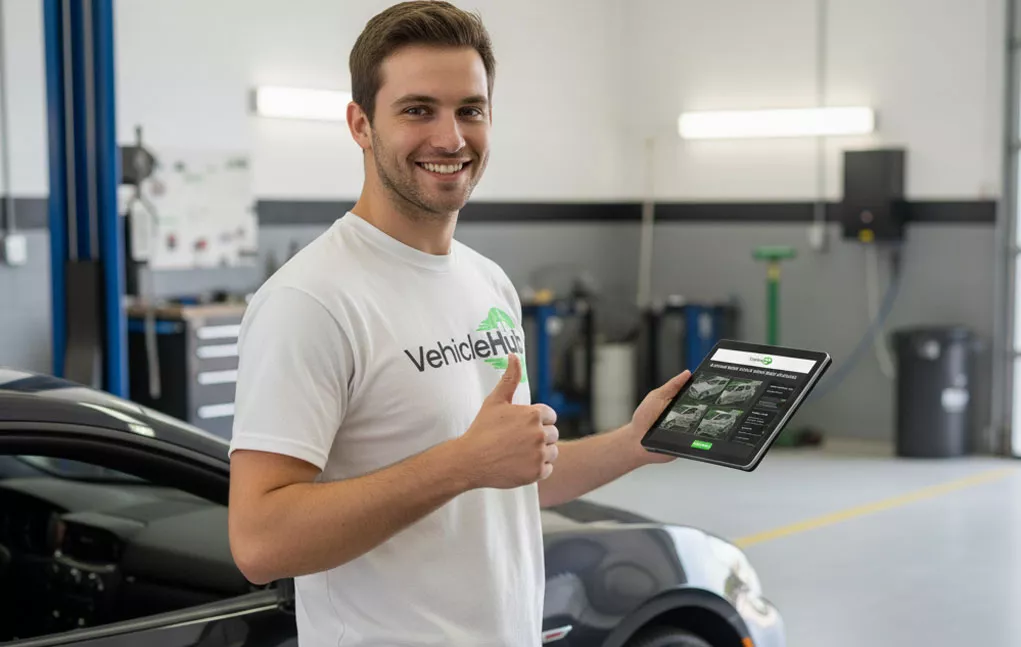
Professional documentation: An estimate produced on a professional platform with consistent formatting, line-item detail, and clean customer information is significantly easier for a carrier to process than a handwritten or improvised quote. Vehicle Hub’s estimate tools produce carrier-ready documentation as a natural output of your normal workflow.
Customer communication: Carriers receive satisfaction feedback from customers they route to preferred shops. Poor customer communication at a DRP shop reflects on the carrier. Shops that proactively communicate status updates, deliver vehicles on time, and handle complaints professionally stay on preferred lists.
Which Carriers to Target First
Start with the carriers that represent the highest claim volume in your market. For hail-prone regions, State Farm, USAA, Allstate, and Farmers are typically the highest-volume carriers for hail damage claims. GEICO and Progressive have also significantly expanded their PDR shop networks in recent years.
Regional carriers can also be valuable DRP partners — particularly because they often have less competition from large MSOs (Multi-Shop Operators) for preferred vendor status, and the relationship with a regional carrier can be more direct and collaborative.
A practical starting point: look at the insurance companies appearing most frequently on the customers currently coming through your door. Those are the carriers with the most customers in your market — and the DRP relationship with the most immediate referral potential.
Maintaining DRP Status: What Keeps Shops on the List
Getting credentialed is the first step. Keeping preferred status — and getting continued high-volume referrals — requires consistent performance against the metrics the carrier monitors.
Key metrics typically tracked by carriers:
- Customer satisfaction scores (from post-repair surveys sent by the carrier)
- Estimate-to-invoice variance (how close your final invoice is to the original estimate)
- Cycle time (days from drop-off to completed repair and customer pickup)
- Re-repair rate (how often vehicles come back with quality issues)
- Response time to new referrals (how quickly your shop contacts a routed customer)
Shops that track these numbers internally — not just waiting for carrier feedback — maintain better performance and avoid surprises during carrier audits. Vehicle Hub’s job tracking and reporting features give shop owners visibility into these metrics as a byproduct of normal operations.
The Right Time to Start Is Now
The PDR shops that have strong DRP relationships during hail season didn’t build those relationships during hail season. They built them in spring — when the phone wasn’t ringing, when they had time to complete the credentialing process without distractions, and when they could make a strong first impression on a carrier rep who wasn’t fielding 200 storm claims simultaneously.
If you haven’t started carrier outreach yet, this week is the right time.
FAQ
How long does it take to get credentialed with an insurance carrier DRP?
Most carriers take 60-90 days from initial application to active referral status, though some streamlined programs can move faster. Credentialing that involves a site inspection often takes longer than fully remote processes. For hail season targeting, beginning outreach by April or May gives you enough time to be active before the peak June-August window.
Do I need I-CAR certification to get on a DRP?
Many carriers require I-CAR Gold Class certification or equivalent technician training credentials as part of DRP credentialing. Requirements vary by carrier — some accept OEM certifications or manufacturer training programs as alternatives. Review each carrier’s credentialing requirements before applying, as unmet requirements will delay or prevent approval.
Can a single-location PDR shop compete with MSOs for DRP referrals?
Yes. While large MSOs have volume advantages in some carrier networks, many carriers specifically value single-location shops with strong local reputations, higher customer satisfaction scores, and greater flexibility on turnaround times. A well-run single-location PDR shop with clean documentation and strong satisfaction metrics can build and maintain excellent DRP relationships.
What happens if my shop doesn’t meet a carrier’s performance metrics?
Carriers typically issue performance warnings before removing a shop from a preferred network. The warning period is an opportunity to address the specific metric that’s underperforming — whether it’s cycle time, estimate accuracy, or customer satisfaction. Shops that respond proactively to carrier performance feedback and can demonstrate improvement typically retain preferred status.
Vehicle Hub helps PDR shops produce the professional, carrier-ready documentation that insurance DRP programs expect — estimates, work orders, invoices, and job records all in one mobile platform. When carriers evaluate your shop’s operational quality, having the right system in place matters. Start your free trial at https://www.vehiclehub.tech today! Contact us at sales@vehiclehub.tech
Checkout other blog posts here!